
Sugar Cravings and Psychiatric Illnesses: Understanding the Hidden Connection
Sugar cravings are a common experience that many people encounter at some point in their lives. Whether it is the desire for a chocolate bar after a stressful day or a craving for desserts late at night, these urges are often considered harmless.
However, persistent and intense sugar cravings may sometimes indicate more than just a preference for sweet foods. Research has increasingly shown that sugar cravings can be closely linked to psychiatric illnesses and emotional well-being.
If you find yourself using sweets to cope with your mood, consulting a top Psychiatrist can help identify the deeper biological or psychological factors driving these intense habits.
Mental health professionals, including psychiatrists such as Dr. Pranshu Agarwal , emphasize that sugar cravings should not be viewed only as a dietary habit. In many cases, they may reflect underlying emotional and psychological factors.
Lifestyle patterns, stress levels, emotional well-being, and behavioral responses can all influence a person's desire for sugary foods.
What Are Sugar Cravings?
Sugar cravings refer to a strong urge to consume foods or beverages that contain high amounts of sugar.
Unlike normal hunger, which develops gradually and can be satisfied with different types of foods, cravings are usually sudden and focused on specific items such as:
- Chocolates and candies
- Cakes and pastries
- Ice cream
- Sweetened beverages
Occasional cravings are completely normal and may happen due to hunger, habit, or celebrations. However, when cravings become frequent and difficult to control, they may be influenced by deeper biological or psychological factors.
Understanding why these cravings occur is the first step toward recognizing their connection with mental health.
How Sugar Affects the Brain
The human brain is naturally designed to seek rewards. When sugar is consumed, it activates the brain’s reward system and stimulates the release of dopamine — a neurotransmitter associated with pleasure, motivation, and satisfaction.
This response creates a temporary feeling of happiness and comfort. Because the experience feels rewarding, the brain remembers it and encourages the behavior to be repeated.
Over time, repeated exposure to sugary foods can strengthen the desire for them, especially during emotionally challenging situations.
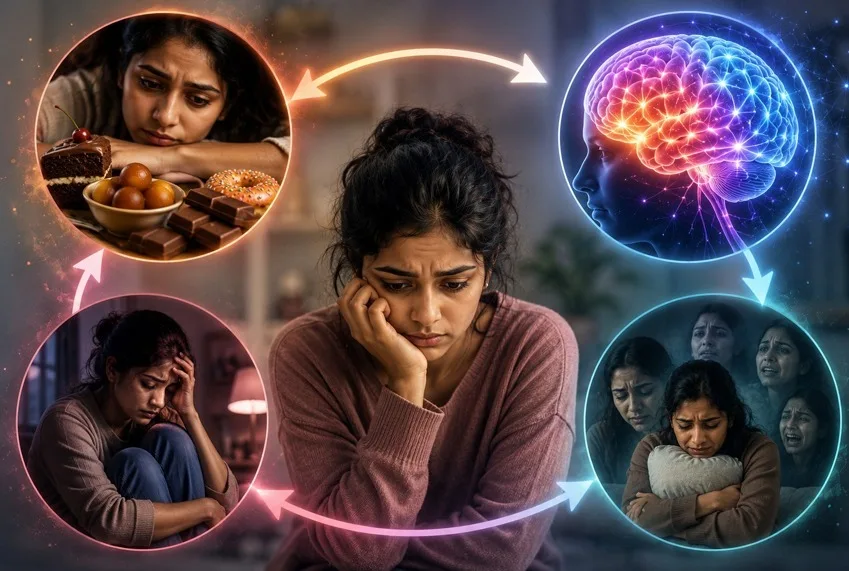
The Vicious Cycle of Sugar Cravings
Many people reach for sweets when they feel stressed, anxious, or emotionally overwhelmed.
The brain begins to associate sugar with emotional relief, creating a cycle that can become difficult to break.
The Relationship Between Sugar and Mental Health
Mental health and eating habits share a complex, two-way relationship.
Emotional states can influence food choices, while nutrition can directly affect mood, energy levels, and cognitive functioning.
People experiencing psychological distress often seek comfort foods because they provide temporary pleasure.
Sugary foods are particularly appealing because they act quickly on the brain’s reward pathways. Although the relief may feel immediate, it is usually short-lived and can be followed by fatigue, irritability, or further cravings.
For individuals living with psychiatric illnesses, this relationship can become even more significant.
1. Depression and Sugar Cravings
Depression is one of the common mental health conditions associated with changes in appetite and eating behavior.
While some individuals lose interest in food, others experience increased cravings for sugary and high-calorie foods. Many people with depression turn to sweets because sugar temporarily increases dopamine activity.
Since depression often reduces feelings of pleasure and motivation, sugary foods may appear to provide a quick emotional boost. However, excessive sugar consumption can create additional challenges.
Research suggests that diets high in added sugars may contribute to inflammation, low energy levels, and unstable mood patterns, potentially worsening depressive symptoms over time.
Common effects of excessive sugar intake during depression include:
- Increased fatigue and low energy
- Severe mood fluctuations
- Difficulty concentrating
- Reduced motivation
- Unintended weight gain
2. Anxiety Disorders and Sugar Consumption
Anxiety disorders are characterized by excessive worry, fear, and nervousness that interfere with daily life.
Anxiety can influence eating patterns in several ways.
When a person feels anxious, the body releases stress hormones such as cortisol and adrenaline. These hormones prepare the body to respond to perceived threats but can also increase cravings for quick sources of energy like sugar.
While sugary foods provide immediate satisfaction, rapid changes in blood sugar levels can sometimes worsen feelings of anxiety.
Symptoms of Sugar-Induced Blood Sugar Crashes:
- Irritability and restlessness
- Difficulty concentrating
- Increased nervousness or panic-like feelings
- Severe energy crashes
3. Stress, Emotional Eating, and Sugar Cravings
Stress is one of the strongest triggers for sugar cravings.
During stressful periods, many people unconsciously practice emotional eating — eating to cope with emotions such as sadness, frustration, loneliness, or boredom rather than physical hunger.
Common signs of emotional eating include:
- Craving sweets during or after stressful situations
- Eating when not physically hungry
- Using food as a primary reward system
- Feeling guilty after eating sugary foods
- Automatically turning to desserts during negative emotions
4. ADHD and Sugar-Seeking Behaviors
Attention-Deficit/Hyperactivity Disorder (ADHD) affects attention, impulse control, and self-regulation.
Although sugar does not cause ADHD, individuals with this condition may be more likely to seek highly rewarding foods.
The brain’s reward pathways function differently in many people with ADHD.
Because sugary foods provide immediate stimulation and satisfaction, they can become highly attractive.
Additionally, impulsive behavior and difficulty maintaining routines can contribute to irregular eating habits and increased consumption of processed sugary foods.
5. Bipolar Disorder and Appetite Changes
Bipolar disorder is characterized by alternating periods of depression and elevated mood states known as mania or hypomania.
During depressive episodes, individuals may seek comfort foods due to low mood and reduced energy levels.
During manic phases, eating habits may become irregular, leading to overeating or missing meals.
Additionally, certain medications used to treat bipolar disorder can influence appetite and metabolism, affecting food preferences and cravings.
The Gut-Brain Connection
Recent research has highlighted the importance of the gut-brain axis — a communication network connecting the digestive system and the central nervous system.
The gut contains trillions of microorganisms (the microbiome) that play important roles in digestion, immunity, and mental health.
Dietary choices directly influence the balance of these microorganisms.
Diets high in processed sugars may negatively affect gut health, which can influence:
- Mood regulation
- Stress response
- Cognitive function
- Emotional well-being
How Excessive Sugar Intake Affects Mental Health
The relationship between sugar and psychiatric illnesses works in both directions.
Just as mental health conditions can increase sugar cravings, excessive sugar intake can negatively affect emotional well-being through several biological mechanisms:
Blood Sugar Fluctuations:
Large amounts of sugar can cause rapid increases in blood glucose levels followed by sudden drops, contributing to fatigue, irritability, and mood changes.
Chronic Inflammation:
High sugar intake has been associated with chronic inflammation. Researchers continue studying how inflammation may contribute to conditions such as depression and anxiety.
Poor Sleep Quality:
Excessive sugar consumption can interfere with healthy sleep patterns. Poor sleep is linked to emotional instability, increased stress, and worsening mental health symptoms.
Managing Sugar Cravings in a Healthy Way
Managing sugar cravings does not mean completely eliminating all sugar permanently.
The goal is to create balanced habits that support both physical and psychological well-being.
Eat Balanced Meals:
Include protein, fiber, and healthy fats to help maintain stable blood sugar levels.
Maintain Regular Meal Timings:
Avoid skipping meals, as it can trigger intense cravings.
Stay Hydrated:
Drink enough water because dehydration can sometimes feel like hunger.
Manage Stress:
Practice mindfulness, yoga, or deep-breathing techniques to handle emotional triggers.
Prioritize Sleep:
Aim for 7–9 hours of quality sleep every night.
Identify Triggers:
Maintain a food and mood journal to understand emotional patterns behind cravings.
When Should You Seek Professional Help?
Occasional sugar cravings are normal.
However, persistent cravings along with emotional difficulties may require professional support.
Consider consulting a mental health professional if you experience:
- Persistent anxiety or depression
- Frequent emotional eating episodes
- Binge eating behaviors
- Significant unintended weight changes
- Cravings affecting daily life and routine
Early support can help identify underlying psychological factors and develop healthier strategies for managing cravings and emotional well-being.
FAQs
1. Can sugar cravings be a symptom of a psychiatric illness?
Sugar cravings alone do not indicate a psychiatric illness. However, frequent and intense cravings may be associated with conditions such as depression, anxiety, ADHD, and emotional eating disorders.
2. Why do people crave sugary foods when they are stressed?
Stress triggers the release of cortisol, which can increase appetite and encourage the body to seek quick sources of energy like sugar.
3. Does eating sugar improve mood?
Sugar may temporarily improve mood by increasing dopamine activity. However, this effect is short-lived and may be followed by fatigue and further cravings.
4. Can reducing sugar intake support better mental health?
Yes. Reducing excessive sugar intake may help stabilize blood sugar levels, support better sleep, and improve overall emotional balance.
5. When should someone seek professional help for sugar cravings?
Professional help may be useful when cravings are accompanied by depression, anxiety, binge eating, significant weight changes, or emotional distress related to food.