
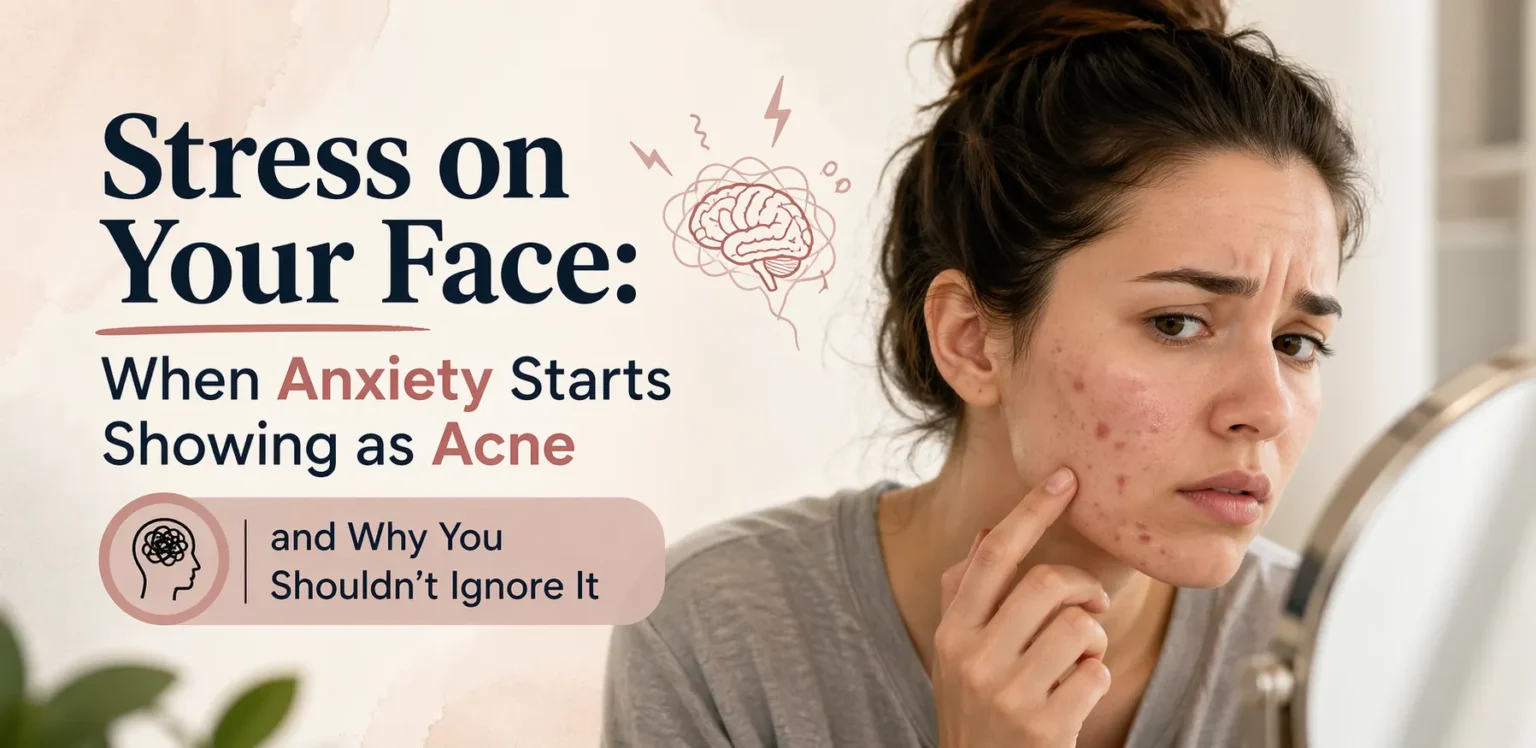
You wake up the morning before a big presentation, walk to the bathroom mirror, and there it is — a fresh cluster of pimples along your jawline that wasn't there yesterday. You haven't changed your diet. You haven't skipped your skincare routine. Nothing about your external habits has changed. But your body kept a record of the past two weeks — the late nights, the racing thoughts, the tension you carried in your shoulders — and now it's showing you the receipt.
This is one of the most frustrating things about stress: it doesn't stay in your head. It moves through your body quietly and systematically, and for many people, the skin becomes the most visible place where it shows up. Acne caused by stress is incredibly common, yet it's also one of the most misunderstood forms of breakouts. People reach for the same face washes and spot treatments they've always used, get confused when nothing works, and often end up making their skin worse in the process.
This article is for anyone who has noticed that their skin seems to react directly to their stress levels. We'll explore why this connection exists, how to identify stress-related acne, and most importantly, when it's time to stop self-experimenting and seek help — not just from a dermatologist, but also from a Mental Health Doctor In Lucknow , who can help address the root cause behind recurring stress and its physical effects on your body.
The Hidden Link Between Stress and Acne
How Stress Hormones Affect Your Skin
To understand why stress causes acne, you need to understand what stress actually does to your body on a hormonal level. When you're under pressure — whether it's a work deadline, a difficult relationship, or just chronic overthinking — your body releases a hormone called cortisol. Cortisol is often called the "stress hormone," and while it serves a useful purpose in short bursts (it's part of your fight-or-flight response), chronically elevated cortisol is a problem for your skin.
One of cortisol's direct effects is that it stimulates your sebaceous glands — the tiny oil-producing glands in your skin — to produce more sebum (oil). More oil on the skin means more opportunity for pores to become clogged. When dead skin cells, bacteria, and excess oil combine inside a pore, you get a breakout. Stress also disrupts hormonal balance more broadly, increasing androgens (male hormones present in all bodies) which further amplifies oil production and makes existing acne worse.
Inflammation: The Root Cause
Beyond oil production, stress triggers something even more fundamental: inflammation. Chronic stress activates your immune system in a way that keeps your body in a low-grade inflammatory state. Inflammation is your body's defense mechanism, but when it's constantly switched on, it begins working against you.
For your skin, this means heightened sensitivity, redness, and a significantly lower threshold for breakouts. Skin that might have tolerated a minor imbalance without reacting now erupts at the slightest trigger. This is why stress-related acne often feels more painful and looks angrier than regular breakouts — the underlying inflammation is already making your skin reactive before the acne even forms.
Signs of Stress-Related Acne
Not all acne is created equal, and recognising the pattern of stress-induced breakouts can save you a lot of time, money, and skin damage from trying the wrong treatments.
The most telling sign is timing. If your breakouts reliably flare up during high-pressure periods — exam season, a difficult month at work, a stressful personal situation — and calm down when things ease up, your skin is responding to your stress levels, not to something you ate or a product you used.
Location matters too. Stress-related acne tends to cluster along the jawline, chin, and lower cheeks. This area is particularly sensitive to hormonal fluctuations, and since stress hormones behave similarly to other hormonal imbalances, breakouts in this zone are a strong signal that something internal is driving your skin's behaviour.
Another red flag is when your usually reliable products simply stop working. If a cleanser, toner, or spot treatment that has always helped you now seems to be doing nothing — or even irritating your skin — it's because the cause of the acne has changed. You're not dealing with a surface-level issue anymore; you're dealing with an internal one that topical products alone cannot address.
Finally, pay attention to your skin's overall texture and sensitivity. If your skin has become more reactive, flushes easily, or feels consistently tight and irritated, your skin barrier may be compromised — which is both a result of chronic stress and a factor that makes future breakouts more likely and more severe.
Why Over-the-Counter Products Often Fail
Treating Symptoms, Not the Cause
The skincare aisle offers an overwhelming number of products that promise to clear acne — salicylic acid cleansers, benzoyl peroxide spot treatments, niacinamide serums, and more. Many of these ingredients are genuinely effective for certain types of acne. But they all share one limitation: they work on the surface of the skin. They can unclog pores, reduce surface bacteria, and calm mild redness — but they cannot regulate your cortisol levels, balance your hormones, or reduce internal inflammation.
When acne is being driven by stress, you're essentially trying to mop up a flood while the tap is still running. The products may offer temporary relief, but without addressing the underlying hormonal and inflammatory cause, the breakouts keep coming back.
Risk of Overuse and Skin Damage
There's another problem that happens when people don't see results — they do more. They layer multiple active ingredients, increase frequency, try stronger formulas, or switch products every few weeks hoping something will finally stick. This approach often leads to over-exfoliation and barrier damage.
Your skin barrier is the protective outer layer that keeps moisture in and irritants out. When it's damaged by excessive use of actives like acids and retinoids, your skin becomes even more sensitive and prone to breakouts. This creates a frustrating cycle where the treatment is making the acne worse — and stress about the worsening acne makes the whole situation worse still.
When You Should Stop Self-Treatment and See a Dermatologist
There is a reasonable period of time to try managing acne at home. But there are clear signals that tell you it's time to get professional guidance, and ignoring them can lead to long-term consequences that are much harder to reverse.
See a dermatologist if your acne has been persisting for more than six to eight weeks without meaningful improvement. If your breakouts are deep, painful, or cystic — the kind that sit under the skin and don't come to a head — over-the-counter products are almost certainly not strong enough to treat them effectively. If your acne is leaving dark marks, red spots, or textural scarring behind even after individual pimples clear, early professional intervention can prevent permanent skin damage.
Perhaps most importantly, take seriously the emotional impact your skin is having on you. Acne is not "just a skin problem." If you find yourself avoiding social situations, feeling consistently self-conscious, or experiencing anxiety specifically about your skin, that is a meaningful signal. Your mental health and your skin health are deeply interlinked, and a dermatologist understands both sides of that relationship.
How a Dermatologist Helps in Stress-Induced Acne
Personalised Diagnosis
A dermatologist doesn't just look at your acne — they look at the full picture. They assess your breakout patterns, location, skin type, lifestyle, and medical history to determine whether your acne is primarily hormonal, stress-related, or a combination of both. This distinction matters enormously because it changes the treatment approach entirely.
Medical-Grade Treatment Plans
Prescription treatments available through a dermatologist are significantly more targeted and effective than anything available over the counter. Depending on your diagnosis, a dermatologist may recommend topical retinoids, antibiotic treatments, hormonal therapy, or in cases of severe acne, oral medication. These treatments work at the source of the problem rather than just the surface, which is why they produce results that OTC products often cannot.
Your dermatologist will also help you build a safe, minimal skincare routine that supports healing without adding further irritation — something that can be hard to navigate alone when there are so many conflicting recommendations online.
Holistic Approach
A Good Dermatologist treats the whole person, not just the pimple. They understand that stress-induced acne requires addressing both the skin and the lifestyle factors driving it. You'll receive guidance on stress management strategies, sleep hygiene, diet, and how to build a consistent skincare routine that works with your skin rather than against it.
Simple Lifestyle Changes That Support Skin Recovery
While professional treatment addresses the medical side of stress acne, certain lifestyle adjustments meaningfully support your skin's healing from the inside out.
Prioritise sleep above almost everything else. Your skin regenerates during sleep, and cortisol levels naturally drop when you rest properly. Even moving from six to seven and a half hours of quality sleep can make a visible difference in your skin over a few weeks.
Incorporate regular movement into your routine — not as punishment, but as a genuine stress outlet. Exercise reduces cortisol, improves circulation, and supports better sleep. Even a 20-minute walk daily is enough to start shifting the internal environment that's triggering your breakouts.
Look at your diet with honesty. High-glycaemic foods and dairy have been linked to acne flare-ups in multiple studies. Prioritising whole foods, staying well-hydrated, and reducing processed sugar can support clearer skin alongside your other efforts.
Finally, simplify your skincare routine. When skin is stressed and reactive, less is genuinely more. A gentle cleanser, a lightweight moisturiser, and a broad-spectrum SPF is often the best foundation while your skin recovers.
The Mind-Skin Connection: Why Ignoring It Makes Things Worse
Here is the part that most skincare content glosses over: stress causes acne, and acne causes stress. It's a closed loop that feeds itself. Every new breakout adds to your anxiety about your skin, which raises your cortisol levels, which produces more oil and inflammation, which causes more breakouts.
Left unaddressed, this cycle can run for months or even years. And the longer it runs, the more likely you are to experience lasting effects — post-inflammatory hyperpigmentation, textural scarring, a chronically compromised skin barrier, and a significantly negative impact on your confidence and mental wellbeing. What begins as a manageable skin issue can quietly grow into something that affects how you show up in your daily life.
Conclusion
Stress acne is not a personal failing or a sign that you're doing something wrong. It's your body communicating that it is under more pressure than it can quietly absorb. The good news is that it is entirely manageable — and the earlier you take it seriously, the better your outcomes will be.
Start by recognising the pattern. Understand that your favourite face wash may not be enough this time, and that's okay. Make the small lifestyle changes that support your skin from within. And if the breakouts persist, become painful, or start leaving marks — please see a dermatologist. A few professional consultations can save you years of trial and error and prevent damage that becomes genuinely difficult to reverse.
Your skin reflects your life. Taking care of one means taking care of the other.
Disclaimer: This article is for informational purposes only and does not constitute medical advice. Please consult a licensed healthcare professional for diagnosis and treatment.